Who Really Was Ann Widdecombe?

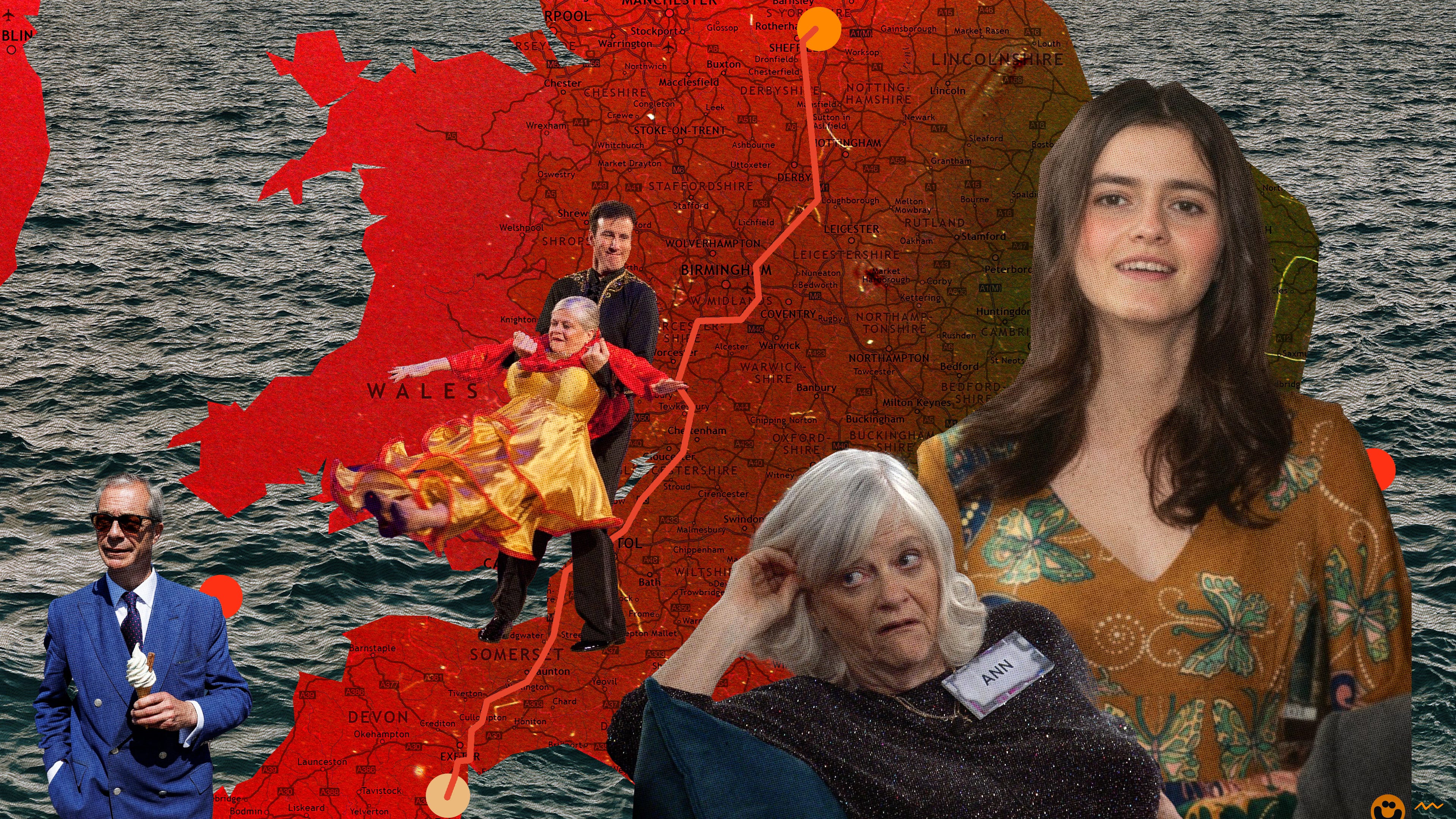
Now that she is dead - bludgeoned to death by an unknown assailant, if you believe the news - I can tell you my Ann Widdecombe story.
It was May 2019 and I was in Dorset to cover a meet-the-candidates event staged by Nigel Farage’s recently-launched Brexit Party. Widdecombe was the star attraction. Because she was more or less a household name, having been both a Conservative Cabinet Minister and, more pertinently, a contestant on the popular TV shows Strictly Come Dancing and Celebrity Big Brother, Widdecombe was considered quite a catch for Farage’s new outfit.
When I met Widdecombe she was just like I expected physically: a bit overweight, frumpily dressed, with a lolling, oversized mouth and small, jagged teeth somewhat redolent of a sand tiger shark’s, a helmet of white hair, pallid skin, wild eyes which seemed to look almost everywhere except at the person talking to her, and with that very distinctive voice whose reassuring, upper middle class contralto kept sabotaging itself with wheezing squeaks like a damaged organ pipe’s. I’m not trying to be cruel, just honest: Widdecombe would have been the first to admit, indeed almost took pride in the fact, that she was no looker. What was probably at least in part responsible for her lifelong celibacy was also a major part of her public image. “I’m toothy, dumpy, ugly, overweight, a spinster - what the hell”, she once said.
She was also just like I expected in terms of character: bossy; breathless; generous; opinionated; forthright; old fashioned; decent; game; considerate; provocative; loquacious; overstated; and obviously quite kind and lovable underneath - the sort of person who, if, say, she lived in your remote Devon village, you’d initially find quite irritating but would come to respect as a likeable, decent sort whom you were glad to have as a neighbour.
And that’s it. That’s my Ann Widdecombe story. I mention my brief encounter with her not because it’s exceptional or even that interesting, but rather because I suspect that it’s entirely representative of the Ann Widdecombe experience that everyone else who ever met her had too.
I’m not saying there was anything insincere about Ann Widdecombe’s Ann Widdecombe act. I’m sure she meant every word of it, every moment of it, at the time. But it was still an act, as the lives of public figures with that level of media prominence always are. Ann Widdecombe may have started out life as a human being, but by the end of it she had definitely worked herself into becoming a brand. In the same way that Snoopy is a brand, or Pitbull is a brand or Snoop Dogg is a brand.
This is why I’m a bit sceptical of all those voices now speculating on how or why Ann Widdecombe died - if she did die - based on their understanding of who they think she was.
For example, some people are speculating that she was bumped off because she knew too much and was about to spill the beans on paedophilia in the Establishment. [Paedophilia which, for some bizarre reason, she’d only just very recently heard about, having hitherto been blithely oblivious to it, despite all those years at Cabinet level in Houses of Parliament positively pullulating with child sex abusers, SRA practitioners and other bottom feeding hypocrites].
Others are stating confidently that there is just no way Ann Widdecombe would have agreed to have her death staged, in the manner of Charlie Kirk’s. How do they know this? Well apparently, it was because she was too high-minded. As well as being an ardent and sincere Christian - she converted to Catholicism in protest at the Church of England’s decision to ordain women as priests - she was also famously principled, one of those awkward squad mavericks who refused to toe the party line if it went against her most cherished values, even to the point of jeopardising her career.
But how would any of us know what Ann Widdecombe would or wouldn’t do? All we have to go on is newspaper reports (ie lies, spin, propaganda), political speeches (ie performances) and the exaggerated version of herself she got so very good at playing in public, especially on shows like Celebrity Big Brother where she souped up her eccentricities even more because she understood that’s what you have to do when you’re a brand: engage in relentlessly on-brand behaviour so as to keep your public happy and unconfused.
Nigel Farage knows this: must appear at every possible opportunity clutching a pint and fag. Pitbull knows this: remember not to fly to Turkey for one of those hair transplants or be seen without trademark white shirt and tie. Snoopy knows this: lie on top of kennel and dream about dog fights with the Red Baron. Snoop Dogg knows this: smoke weed; act stoned even if you’re not. Ann Widdecombe knew it. Or, according to preference, Ann Widdecombe still knows it because she’s not dead yet, just in one of those safe houses where they hide all the other not-dead celebrities - Charlie Kirk; Jo Cox; David Bowie; etc - before they’re assigned to their new location at an underground base in Antarctica or an island in Australia or ‘Valhalla’ or wherever.
When I met Ann Widdecombe in 2019 I was still, relatively speaking, a Normie. If Widdecombe had died in mysterious circumstances at that time I would probably have been gripped - as Normies currently are - by the ongoing search for her as-yet-unidentified killer. Having once met her I might even have felt an extra twinge of sympathy that this lovable battle-axe had come to such an undeservedly sticky end.
Once you’re awake, though, it becomes impossible to view these incidents in the same way because you know that they’re most likely staged. I’m not saying that Ann Widdecombe is or isn’t dead because having not seen the body I couldn’t tell you either way. What I do know is that this is showing all the signs of being another of their psyops and as a consequence I find it hard to get emotionally involved in any of the published details, most of which will be a total fabrication.
The Normie reaction to this would be: “How dare you? An elderly woman was brutally murdered and all you can do is sneer that it’s fake.”
You get this reaction from some purportedly Awake people too. Just recently I was berated and insulted - called ‘puerile and heartless’, told I wasn’t a real Christian - by a podcast listener on my Telegram channel for not believing that a deranged immigrant killer called Axel Rudakubana killed three little girls at a Taylor-Swift-themed dance workshop in Southport, Merseyside.
I’ve written about this ‘Shoot the Messenger’ behaviour before. Whenever you question an official narrative where deaths are involved - October 7, the Trump ‘assassination’, Charlie Kirk, the Manchester Arena ‘bombing’, etc - you get jumped on by shroud-wavers shrieking ‘But muh dead firefighter hero Corey Comperatore!’ or ‘But muh 40 beheaded babies!’
And while I can understand this response from Normies, who dutifully believe whatever the media tells them to believe, I find it less excusable when it comes from people who purport to be awake.
My two competing theories on this, explored in essays well worth your attention if you can be bothered, are as follows.
One - see Discrediting Our Cause - they’re not quite as Awake as they think. They’ve grasped all the basic stuff, all the low-hanging fruit - vaccines are bad; CBDCs and digital passports are a control mechanism; ‘climate change’ is a lie; etc - but they can’t quite let go of the overarching, Normie paradigm. They’re what I call ‘purple-pilled’, red-pilled on some issues, blue-pilled on others. They can’t quite accept that not just a few things they’ve been told but that everything they’ve been told is a lie.
Two - see Everyone Is a Baddie - they are agents of disruption. It’s an established intelligence services tactic to discredit Awake influencers - which is what, presumably, I am - through a process known as ‘manufactured doubt.’ So what these characters will do is lurk in the comments sections, pretending to be broadly sympathetic but then dropping in apparently good-faith criticisms. “Big fan of your stuff generally,” they might say. “But you’ve pushed it too far this time by denying the reality of cruelly beheaded babies/martyred Charlie Kirk/heroic murdered firefighter. Not everything is a conspiracy!”
What makes me suspicious of these responses is the intensity of the vitriol. They take it really personally, or at least pretend to, these people. They want you to know both how very much they care and how repellant and loathsome and stupid and morally inferior (and whatever other insults they can come up with: eg “oh and by the way, I only listen to your podcasts because you have some good guests not because of you, so there”) you are. Which you could understand if it were their late mother you’d just insulted. But it seems a bit of an overreaction to a story about someone they probably never even met.
According to the person who called me ‘puerile and heartless’, for example, ‘children died in a very bloody fashion’ in Southport. He knows this, he says, because “I live locally and attend one of the churches where a bereaved family is part of the congregation.”
This sounds quite persuasive until you ask the question: “But how can he be sure it’s not all part of the act?”
Ole Dammegard, the pre-eminent researcher of staged events, tells us that an awful lot of money and expertise and attention to detail goes into faking such operations. The expense is borne by the lucrative GoFundMes which spring up in the aftermath of the tragedy. Usually, these fundraisers provide more than enough money for the fake victims to be given a new identity and a new life elsewhere free from financial constraint.
I’m not saying that this is definitely what happened in the deprived Merseyside town of Southport. But it’s surely not beyond the realms of possibility - nor is it inhumane or immoral to suspect it. And if it did happen that way, there’s no reason to imagine that there wouldn’t still be ‘bereaved’ members of the family around in church and elsewhere mourning their lost loved ones. Which of us, honestly, could tell whether they were faking it or if they were for real, unless perhaps we knew them really really well?
But even knowing someone ‘really, really well’, I would suggest, rarely gives you the whole picture.
There’s strong anecdotal evidence that quite a few people in high places - leading politicians, world famous actors, senior clergy and judiciary, newspaper editors, generals, etc etc - indulge in horrendous practices up to and including child sacrifice. The fact that so many of our elites do this - frequently and on a large scale, if we are to believe the whistleblowers - and get away with it means that there must be an awful lot of people out there in public life (and elsewhere) who are exceptionally good at deception.
Which brings me back to Ann Widdecombe. How would any of us have any idea that she was who she told us she was? Like all politicians who rise beyond a certain level, she got where she did by becoming a caricature of whatever genuine characteristics she may once have possessed. She was an actor not a real person.
On this basis, I can perfectly well imagine a scenario in which doughty, upstanding, honest Ann Widdecombe was made an offer she couldn’t refuse - and yet refused it. “You’d rather die than agree to let us fake your death and whizz you off to a new location, there to spend the rest of your days watching old Miss Marple episodes, cross-stitching cat pictures and writing letters under a pseudonym to the Catholic Herald? Very well Ms Widdecombe.”
But I can just as easily imagine one in which she realised that at 78 she was getting a bit too old for all this political chicanery, couldn’t bear the idea of having to form part of a government with a shower of individuals as spivvy as Farage & co, and took the money and ran.
What I definitely can’t believe, even for one fraction of a second, is the story assiduously being promoted by the police and the media: that a hard-left activist from Rotherham in the north of England got into his car and drove 300 miles to a remote Devon village just so he could kill an elderly has-been politician with a stick he’d supposedly brought with him for the purpose.
Lone wolf killers: they only exist in the fiction. Same goes for ‘principled politicians.’
Agree it's highly likely she was bumped off by the intelligence agencies. But as to her sitting on an island somewhere with Princess Di, JFK and Charlie Kirk - that's for the birds. You talk about not knowing her. Here is a tribute from someone who did know her. She also did a lot of charity work as well as panto. I bet those that would denigrate her memory didn't mention that? If I could I would attach photos. And no - she isn't wearing purple.
"Most of us know Ann as a formidable politician, a fearless debater, a woman who never seemed to retreat an inch from an argument. They know the television personality with the unmistakable voice, the uncompromising opinions and the razor-sharp wit.
I know that Ann too.
But I was fortunate enough to know the private, deeply compassionate and charitable Ann.
We first met in 2011 at the House of Lords when Ann was Vice-President of The Leprosy Mission England and Wales and I was Head of Marketing and Communications. Our first encounter was, shall we say, robust. Neither of us was inclined to back down and we clashed almost immediately.
Oddly enough, that was the beginning of a friendship that lasted well over a decade.
Mutual respect doesn't always begin with agreement.
I found myself back at the House of Lords a few years later for a fundraising event hosted by Ann and Baroness Cox. It happened to fall on the day of the Brexit vote. I'd voted Remain; Ann, of course, had been firmly on the other side. She simply wouldn't let it go. Throughout the day she kept returning to the subject with mock exasperation, determined to persuade me of the error of my ways. It was vintage Ann—spirited, relentless and thoroughly good-humoured.
Our friendship deepened during two overseas visits with The Leprosy Mission England and Wales to Ethiopia and later Mozambique. Those journeys showed me a side of Ann that the public rarely saw.
She self-funded both trips, not for publicity or headlines, but because she genuinely cared about people affected by leprosy. She used every platform available to her—from newspaper columns to television appearances—to shine a light on a disease that most of the Western world had long forgotten. Her influence helped transform awareness of a condition that still condemns millions to lives of stigma as well as sickness.
In Ethiopia we visited communities living in conditions that were almost impossible to comprehend. Families lived in makeshift shelters. Sanitation was primitive. Poverty was overwhelming. Ann later wrote movingly about people sharing just a handful of pit latrines and crawling through contaminated pathways simply to reach the roadside and beg.
Seeing it with your own eyes was something else entirely.
During that trip almost our entire party succumbed to severe food poisoning. Ann spent more than five hours being violently ill on an old, what she called ‘Charabang’ bus travelling to remote villages.
Most people would have cancelled the visit.
Ann refused.
The following day she carried on visiting projects in intense heat as though sheer determination alone could overcome physical exhaustion. Meanwhile I became so ill that I ended up in hospital. Even then, Ann wouldn't leave until every planned visit had been completed.
What amazed me most wasn't simply her stamina.
It was her mind.
Despite feeling dreadful, she sat through hours of detailed project briefings, frequently disappearing to the bathroom before returning without missing a beat. Later that same day she gave a television interview in which she effortlessly recalled facts, figures and statistics from memory with astonishing precision.
Her intellect really was extraordinary.
Over the years I interviewed Ann several times, first for Radio Newark and later for my Monkey Business podcast. Last year I stayed with her at her home in Devon, where our conversations stretched long into the evening.
Usually they took place over a double brandy.
I committed what Ann regarded as a near-criminal offence by putting ice in mine.
Coming from a naval family, she had strict rules about such things. Gin, she insisted, was for before dinner. Brandy or whisky came afterwards. "It's an utterly ingrained habit," she told me. "If someone asks for gin and tonic after dinner, I'm always shocked."
That was Ann.
Disciplined, traditional and utterly unapologetic.
We certainly didn't agree on everything. She regarded my work as a hypnotherapist as "woo woo". Our discussions about nuclear power became wonderfully animated.
But disagreement never threatened our friendship.
Although being stranded in Africa after a connecting flight was cancelled—with no luggage, an exhausted photographer who was later diagnosed with tuberculosis contracted during the trip, and both of us recovering from food poisoning—wasn't exactly one of our finer moments. Looking back, it became one of those adventures we could eventually laugh about, although it certainly wasn't funny at the time.
In an age where too many people mistake disagreement for dislike, Ann showed me that it was perfectly possible to argue passionately while respecting the person sitting opposite you.
When I once asked her advice about writing a novel and explained I was taking a creative writing course, she looked at me and said simply, "Stop being stupid and just write the book."
Classic Ann.
Blunt. Practical. Exactly what I needed to hear.
Away from the cameras she also possessed a wicked sense of humour and a genuine warmth that many people never witnessed. She adored animals and was delighted that her cat, Alouitious, immediately adopted me during my visit. As a lifelong cat owner myself, I wasn't surprised. Less successful were her pot plants, casualties of a life so busy with broadcasting, writing and public speaking that watering them had become something of an optional extra. I spent part of my stay trying to nurse them back to life.
To the public, Ann Widdecombe was a political force who served as an MP, minister and later an MEP with absolute conviction. She never trimmed her opinions to suit the prevailing mood and, whether people agreed with her or not, they always knew exactly where she stood.
Piers Morgan described her as a "charismatic, combative gem." Jeremy Vine remembered her as a formidable politician with a terrific sense of humour. Both were right.
To me, though, she was simply Ann.
Fiercely intelligent. Incredibly loyal. Wickedly funny. Deeply compassionate. Kind beneath the formidable exterior.
Above all, she possessed an unwavering Christian faith that shaped everything she did, including her tireless work for people living with leprosy, often far from the public gaze. I saw first-hand how those visits affected her. She returned home determined not simply to tell their stories but to persuade others that they mattered.
She believed completely in God and in heaven.
If she was right—and she would undoubtedly tell me she was—I suspect she's already settled into a lively debate with the angels.
Rest in peace, Ann. It was a privilege to know the woman behind the public persona, and I'll miss you enormously." By Rosalyn Palmer
Great article James. There are more of us that think like this than you know.